


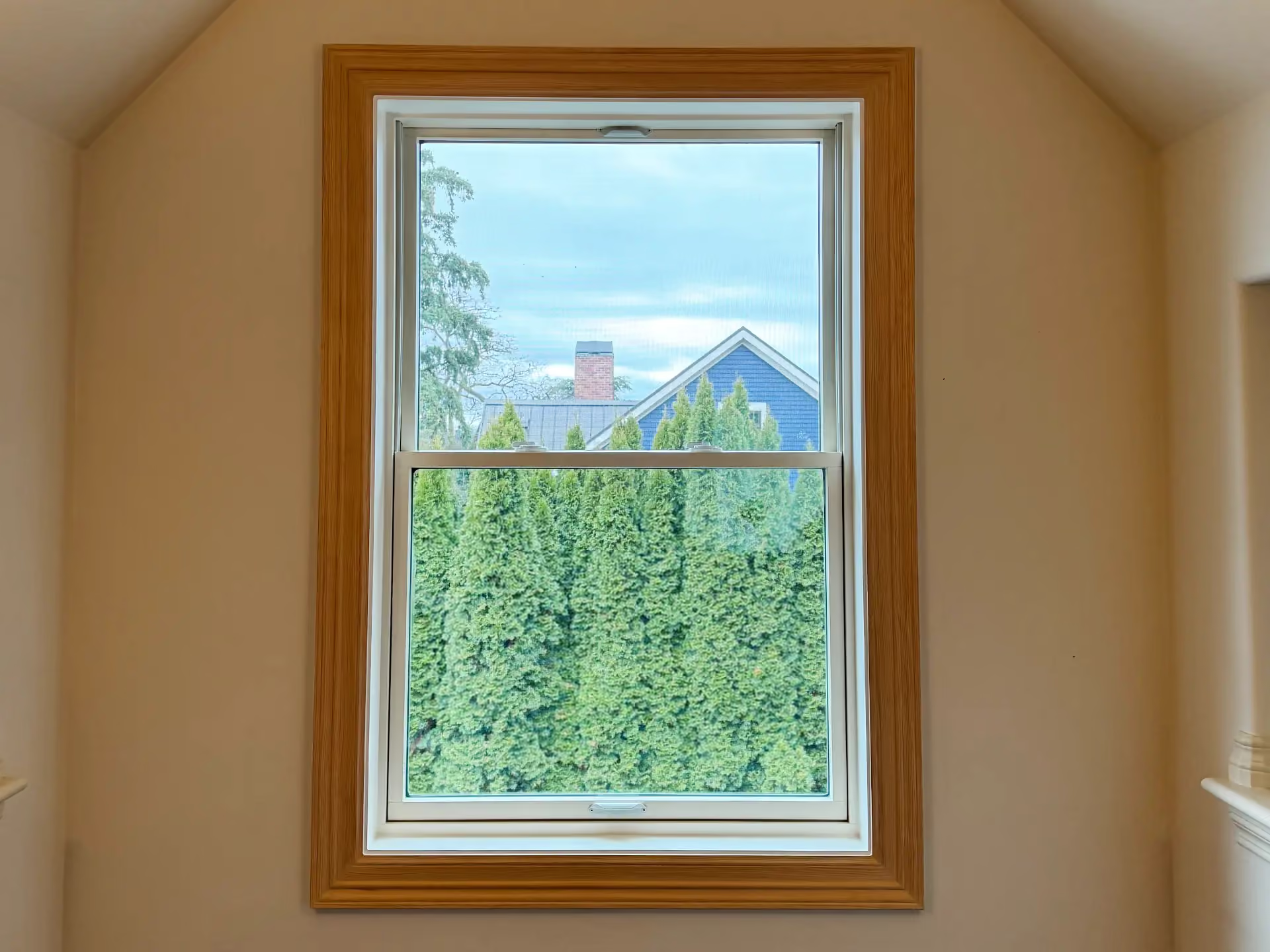
Vinyl vs. Wood Windows: Which Is Better for Seattle-Area Homes?
Updated July 21, 2026. Vinyl and wood can both be good replacement-window materials, but they solve different priorities. Vinyl usually makes the strongest case for a controlled budget and low routine maintenance. Wood is often chosen for its natural interior appearance, design flexibility, and compatibility with traditional architecture. The right choice for a Seattle-area home depends on the exact product, the opening, exposure to weather, maintenance expectations, and the quality of installation.
This guide compares vinyl vs. wood windows by cost, upkeep, energy performance, appearance, durability, and local climate considerations. It is intended to help homeowners narrow the options before reviewing specific products and an installation proposal.
Vinyl vs. Wood Windows at a Glance
- Initial budget: vinyl is commonly the more budget-conscious option; wood normally carries a higher initial price.
- Routine maintenance: vinyl needs little beyond cleaning and inspection; wood finishes need periodic attention and moisture protection.
- Interior appearance: vinyl provides a clean, consistent finish; wood offers natural grain and can coordinate with existing millwork.
- Energy performance: either material can perform well. Compare the exact unit's NFRC-rated U-factor and solar heat gain coefficient rather than judging by frame material alone.
- Design flexibility: wood is often preferred for traditional detailing, stain-grade interiors, and custom architectural work; vinyl is available in many practical styles and configurations.
- Best fit: vinyl often suits projects focused on value and easy upkeep, while wood often suits projects where authentic interior character is a leading requirement.
These are general tendencies, not guarantees. Product line, glass package, frame construction, hardware, installation method, and opening condition can matter as much as the material name.
What Are Vinyl Windows?
Vinyl windows use frames made primarily from polyvinyl chloride, commonly called PVC. The color is typically integrated into the material, so the frame does not require regular painting. Manufacturers use multi-chambered profiles, reinforcement, weatherstripping, and insulated glass in different combinations; performance therefore varies by product line.
Homeowners commonly choose vinyl when they want predictable upkeep, practical energy performance, and a lower entry price than many wood products. Vinyl is available in familiar operating styles such as single-hung, double-hung, casement, slider, picture, and specialty windows. Available colors, dimensions, and exterior finishes depend on the manufacturer and model.
Main advantages of vinyl
- Generally lower initial cost than comparable wood products.
- Low routine maintenance and no recurring stain or paint schedule.
- Good resistance to moisture-related surface deterioration.
- Many standard styles and energy-efficient glass packages are available.
Tradeoffs to consider
- The frame cannot usually be refinished like natural wood.
- Color, profile, and custom-detail choices can be more limited in some product lines.
- Frame dimensions and reinforcement vary, especially on larger openings.
- Quality differences between entry-level and premium vinyl products can be significant.
What Are Wood Windows?
Wood windows use wood as the primary structural and interior frame material. Many current products pair a wood interior with aluminum, fiberglass, or another protective exterior cladding. This combination preserves the interior appearance while reducing direct weather exposure on the outside. Unclad wood products require a more deliberate exterior finish and maintenance plan.
Wood is frequently selected for homes where interior trim, historic character, architectural proportions, or a stain-grade finish are important. It can be painted or stained and coordinated with floors, cabinetry, casing, and other millwork. Those benefits come with a higher purchase price in many product lines and a greater need to monitor coatings, joints, and moisture exposure.
Main advantages of wood
- Natural grain and a warm interior appearance.
- Broad paint, stain, trim, and architectural-detail options.
- A strong fit for traditional, historic, and custom interiors.
- Finish can often be repaired or renewed when maintained correctly.
Tradeoffs to consider
- Usually a higher initial investment than vinyl.
- Finish and moisture protection require periodic inspection and maintenance.
- Neglected coatings or failed water management can allow deterioration.
- Field finishing and detailed trim work can add time and cost to the project.
Cost of Wood Windows vs. Vinyl
For comparable sizes and configurations, vinyl is generally the lower-cost starting point. Wood products commonly cost more because of material, manufacturing, finish, cladding, and customization options. However, material is only one part of the installed total. Window size, operating style, glass, color, grilles, hardware, access, trim, flashing, and concealed damage can change the final number.
A basic vinyl unit should not be compared with a highly customized clad-wood unit as though the only difference were frame material. Ask each contractor to identify the manufacturer, product line, glass package, installation method, interior and exterior finish work, disposal, warranty, and allowances for repair. For broader budgeting factors, see the 2026 Seattle window replacement cost guide.
Long-term cost also includes upkeep. Vinyl avoids recurring painting or staining, while wood may justify its additional care when the interior finish and architectural fit are central to the project. The right value calculation depends on how long the homeowner expects to keep the property and how much maintenance they are willing to manage.
Which Material Is More Energy Efficient?
Frame material alone does not determine whole-window energy performance. Glass composition, low-emissivity coatings, gas fill, spacers, sash design, weatherstripping, frame construction, and installation all contribute. A well-specified vinyl window can outperform a poorly specified wood window, and the reverse can also be true.
Use the label from the National Fenestration Rating Council to compare exact configurations. A lower U-factor indicates less heat transfer through the complete window. Solar heat gain coefficient indicates how much solar radiation passes through the unit. ENERGY STAR qualification also relies on independently tested NFRC values and varies by climate criteria.
For Western Washington, product selection should balance winter heat loss, summer solar exposure, room orientation, comfort, and code requirements. Installation remains critical: gaps, poor insulation, failed sealant, or incomplete flashing can undermine a high-performing product.
Maintenance in the Pacific Northwest Climate
Seattle, Bellevue, Kirkland, and nearby communities experience long periods of wet weather. No frame material removes the need to manage water correctly. Sill condition, flashing, drainage paths, exterior sealant, siding integration, roof runoff, and landscaping can all affect an opening.
Vinyl frames should be cleaned with manufacturer-approved products, and tracks, weep paths, weatherstripping, glass seals, and perimeter joints should be inspected. Avoid painting vinyl unless the product manufacturer specifically permits it.
Wood interiors should be checked for finish wear, staining, condensation, and soft spots. Exterior wood or damaged cladding needs prompt attention because exposed end grain and failed coatings can absorb moisture. Even clad-wood windows require inspection at joints, corners, sealant transitions, and penetrations.
For either material, persistent condensation or staining should be investigated rather than covered. It may indicate indoor humidity, air leakage, failed glazing, drainage issues, or water entering from another part of the wall.
Appearance and Architectural Fit
Wood has a clear advantage when the goal is visible natural grain, stain matching, traditional profiles, or coordination with existing millwork. It can be especially appropriate in prominent living spaces, custom homes, and projects where preserving architectural character matters.
Vinyl provides a clean and consistent appearance that works well in many remodeled and contemporary homes. It is often an efficient choice for secondary elevations, rental properties, phased projects, and rooms where low maintenance matters more than a stain-grade interior. Premium vinyl lines may offer additional colors, simulated divided-light patterns, and upgraded hardware.
The decision does not have to be purely aesthetic. Ask to see frame and sash samples, corner sections, hardware, screens, grille patterns, and interior trim details. A small profile difference can affect glass area and sightlines across a whole elevation.
Durability and Service Life
There is no honest universal lifespan for all vinyl or all wood windows. Durability depends on product quality, opening size, exposure, installation, operation, maintenance, and local conditions. A premium product installed into a sound, properly flashed opening is a different proposition from a low-grade unit placed over unresolved damage.
Vinyl does not rot and requires little surface maintenance, but its seals, hardware, insulated glass, weatherstripping, and frame connections still age. Wood can remain serviceable for a long time when protected from moisture and maintained, but neglected finishes and drainage failures can cause localized deterioration. Review both the manufacturer's product warranty and the contractor's labor warranty, including exclusions and transfer terms.
Installation Matters More Than the Material Debate
A window is part of the exterior wall's water, air, and thermal control layers. The installer must determine whether an insert replacement can retain the existing frame or whether full-frame removal is needed to address flashing, rot, dimensions, or trim. The proposal should identify the method instead of using the word "replacement" without a scope.
For both vinyl and wood, confirm how the contractor will handle opening preparation, sill support, shimming, fastening, insulation, flashing, sealant, exterior trim, interior casing, cleanup, and concealed damage. Large units may also require specific reinforcement or installation procedures from the manufacturer.
Cascade View Construction installs replacement windows across the region, including window replacement in Seattle and window replacement in Bellevue. Local inspection is necessary because wall assemblies, prior remodels, and exposure differ from home to home.
How to Choose Between Vinyl and Wood
- Define the leading priority. Decide whether budget, minimal upkeep, natural appearance, historic character, or customization carries the most weight.
- Inspect the openings. Determine whether existing frames can remain and whether rot, flashing, or trim work changes the scope.
- Compare exact products. Review NFRC ratings, glass, frame profiles, hardware, finishes, screens, warranties, and size limitations.
- Review maintenance honestly. Choose wood only with a realistic plan for monitoring and renewing finishes; choose vinyl with an understanding of its color and repair limitations.
- Compare complete installed proposals. Ensure removal, flashing, insulation, trim, disposal, permits when required, and change-order rules are included.
When Vinyl Is Usually the Better Fit
- The project has a defined budget and several openings.
- Low routine maintenance is a high priority.
- A painted or stained natural-wood interior is not required.
- The selected product meets the necessary size, performance, color, and design requirements.
When Wood Is Usually the Better Fit
- Natural grain or stain matching is central to the interior design.
- The home has traditional detailing or custom millwork that should be preserved.
- The homeowner accepts periodic finish inspection and maintenance.
- The additional initial cost is justified by the architectural result.
Frequently Asked Questions
Are wood windows better than vinyl windows?
Not universally. Wood is often better for natural appearance, traditional detailing, and finish flexibility. Vinyl is often better for a lower initial budget and minimal routine maintenance. Compare specific products and installed scopes rather than material labels alone.
Are vinyl windows energy efficient?
Many are, but performance varies. Compare NFRC-rated U-factor and solar heat gain coefficient for the exact size, glass package, and configuration. Correct installation is also essential.
Do wood windows work in Seattle's wet climate?
Yes, when the product, exterior protection, flashing, drainage, sealant, and maintenance are appropriate. Clad-wood designs reduce direct exterior exposure, but joints and finishes still need inspection.
Which windows need less maintenance?
Vinyl generally requires less finish maintenance. Both materials still need cleaning and periodic checks of glass seals, hardware, weatherstripping, drainage, and perimeter joints.
Can vinyl and wood windows be used in the same house?
Yes. Some homeowners prioritize wood in prominent interior spaces and use vinyl where easy upkeep and budget are more important. Exterior appearance, sightlines, colors, and grille patterns should be coordinated before ordering.
Should I choose insert or full-frame replacement?
The existing opening determines the answer. Inserts can work when the retained frame is sound and dimensions are suitable. Full-frame replacement may be appropriate when flashing, rot, trim, water management, or opening dimensions need to be addressed.
Compare Window Options for Your Home
Material selection is easier after the openings are measured and the project priorities are clear. Review all window replacement options, see completed installations in the project gallery, or discuss vinyl and wood products with Cascade View Construction.
Request a written quote or schedule an appointment. You can also call (425) 540-7069.
Sources and Methodology
This comparison uses general manufacturer guidance and standardized performance resources reviewed July 21, 2026. Product performance, maintenance, and warranty requirements should always be confirmed for the exact model: